As Matariki approaches, Aotearoa pauses to mark the Māori New Year, a moment to reflect on what has passed, celebrate what we have, and look ahead with intention.
This year's theme, Herenga Waka, the gathering of many canoes, speaks to something we know well in the biosecurity space: that protecting the places we love is never a solo effort. It takes communities, organisations, landowners, travellers, and everyday people all pulling in the same direction.
Matariki is a time to think about what we're safeguarding for generations to come. Healthy land, healthy water, healthy ecosystems. And biosecurity is very much a part of that story.
Ngā mihi o Matariki ki a koutou katoa.
Our updates include:
Upcoming events
TMBC new website
TMBC Co-Chair Dr Beccy Ganley attends the launch of a new regional biosecurity collaboration
Farmers working to eradicate wallabies
Travelling this winter? Watch out for hitchhikers
Know your enemy: Asian paddle crab
Marine Invaders: the game for ocean lovers, on sale now

The Future of Regional Biosecurity - Online!
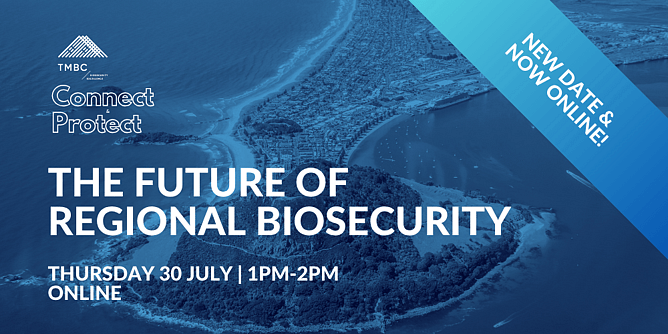
The July Connect and Protect Forum is now moving online and will now be taking place on Thursday 30 July at 1pm, making it easier than ever to join the conversation from wherever you are.
Join us for an essential forum hosted by Tauranga Moana Biosecurity Capital (TMBC). This event brings together our strategic leadership group, TMBC members, and the wider community to discuss the vital work protecting our region’s natural heritage. As we navigate a landscape of proposed legislative shifts, we will explore how we can collectively safeguard our environment against evolving threats.
Speakers & Sessions
Beccy Ganley, Co-Chair, Tauranga Moana Biosecurity Capital (TMBC)
TMBC Milestones & Momentum
Fiona McTavish, Chief Executive, Bay of Plenty Regional Council (BOPRC)
Navigating Reform: The Future of Regional Governance
Bay of Plenty Regional Council (BOPRC) Representative
On the Frontlines: Current Biosecurity Work
When: Thursday 30 July 2026 | 1pm - 2pm
Where: Online via Microsoft Teams
Who: Open to all - TMBC members and the wider community
If you have already registered for the forum, you are automatically registered online. Registrations are mandatory to receive the online meeting link.
Our highly anticipated event is back - the Biosecurity Excellence Symposium.
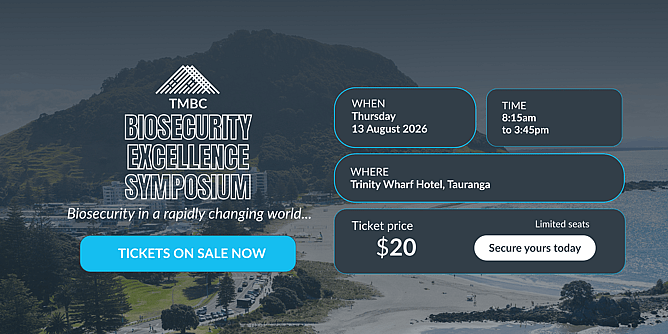
Our highly anticipated event is back - the Biosecurity Excellence Symposium.
Our world is moving faster than ever, from shifting climates and global trade pressures to emerging technologies. This year’s symposium focuses on the agility and foresight required to stay ahead of these evolving threats and protect what we love about Aotearoa.
Join us for an informative and interactive day designed for everyone dedicated to the future of our environment. We will be joined by biosecurity doers and thinkers who are navigating this new reality through:
Innovation and technology: Exploring fresh approaches and new tools that bridge the gap between tradition and the future.
Collaborative action: Building cross-sector strength, from our ports and primary industries to innovators and educators.
Education and engagement: Empowering rangatahi and the wider community with the skills to identify and manage emerging biosecurity risks.
In a rapidly changing world, our success depends on our ability to learn and adapt together. This symposium is a vital platform to share insights, spark vibrant discussion, and forge the connections needed to thrive.
What: TMBC annual Biosecurity Excellence Symposium 2026
When: Thursday 13 August 2026 | 8:15am - 3:00pm
Where: Trinity Wharf Hotel, Tauranga
Cost: $20pp
Seats are limited, grab yours today.
TMBC welcomes new regional momentum with launch of
Waitaha Canterbury Biosecurity Collective (WCBC)
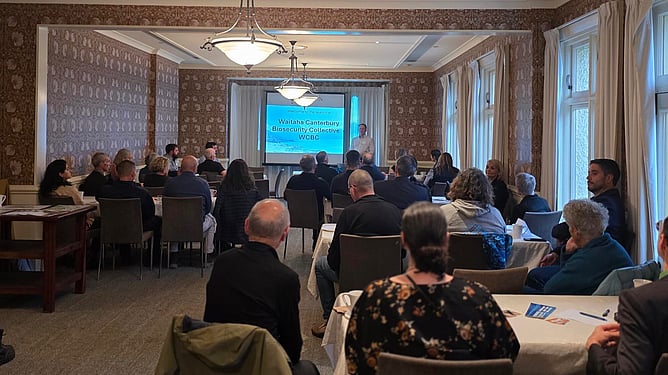
TMBC Co-Chair, Dr Beccy Ganley, attended the launch of the newest regional biosecurity collaboration, the Waitaha Canterbury Biosecurity Collective (WCBC), in Christchurch on 2 June.
Joining representatives from across the biosecurity system, including agencies, industry groups, iwi, local authorities, and community organisations, Beccy reflected that the initiative signals a shared commitment to a more coordinated and proactive approach to managing biosecurity risks across Canterbury.
As the first regional biosecurity collective in Aotearoa, TMBC has served as an exemplar for regional collaboration, helping to demonstrate what regionally driven and nationally connected biosecurity action can achieve. This has also included playing a key role in supporting the establishment of Biosecurity Taranaki in 2024.
Looking ahead
Strong regional collaboration is a cornerstone of New Zealand's biosecurity system. With Canterbury now joining this approach, there is growing confidence that communities are better equipped to detect, prevent, and respond to biosecurity threats.
We look forward to continued collaboration and knowledge-sharing with WCBC and other collectives, as together we work to safeguard our unique environments, economies, and way of life for future generations.
Farmers working together with farmers to stop wallabies
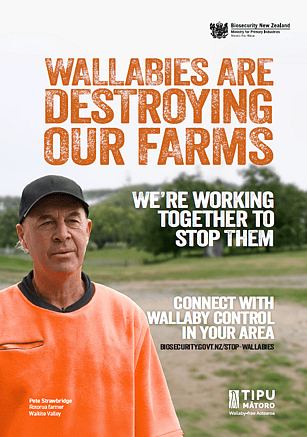
Recently, you may have seen a campaign on how introduced wallabies impact farms. It highlights the benefits of farmers and landowners connecting with local control efforts to stop wallabies in their tracks.
Featured are Bay of Plenty farmers Shanice Young, Chair of Te Puke Young Farmers, and Pete Strawbridge of Pamū’s Waikite Valley Farm near Rotorua.
For Pete, working with the Tipu Mātoro National Wallaby Eradication Programme has delivered results. On this wallaby-affected property, this has meant more grass, less pasture fouling, and flourishing native and riparian plantings.
Shanice, planning a long-term future in farming, recognises the ongoing economic and environmental pressures of wallaby damage. She sees collaboration as key. “Coordinate your efforts and let’s stay ahead,” is her message to farmers in affected areas.
Visit MPI to learn more about wallaby control efforts across Aotearoa.
Jetting off this winter? Don't bring back uninvited guests.
School holidays are just around the corner, and plenty of us are heading overseas for a well-earned break. But before you zip up that suitcase to return back to Aotearoa, it's worth thinking about what might be trying to hitch a ride home with you.
New Zealand's biosecurity system kicks in the moment your plane touches down. At the airport, you'll pass through a biosecurity processing area where you must declare any risk items on your New Zealand Traveller Declaration. Amnesty bins are available before you reach the processing area, so if you've got fruit, seeds, or other risk goods, that's your chance to dispose of them, no questions asked.
Not sure what counts as a risk item? Check the full list here. Getting it wrong isn't just an inconvenience. Undeclared items can result in a fine or prosecution under the Biosecurity Act 1993.
Once you clear arrivals, the job isn't quite done. Many of New Zealand's priority pests are experts at hiding in luggage, packaging, and gear. When you get home and unpack, take a good look at what you've brought back. If something looks out of place, don't ignore it.
Spot something suspicious? Call Biosecurity New Zealand on 0800 80 99 66 or use the online reporting form.
Have a great trip. Just leave the stowaways behind.
Know your enemy - the asian paddle crab
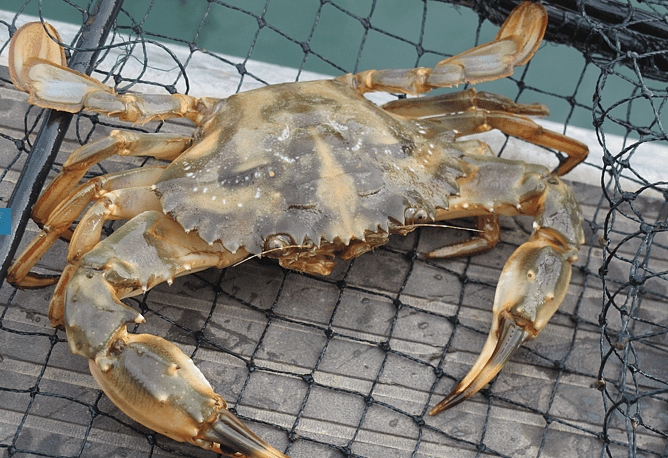
Originally from the coasts of Japan, Korea, and Malaysia, the Asian paddle crab has been turning up in New Zealand harbours since 2000, with an ongoing trapping programme being carried out in both the Tauranga and Ōhiwa Harbours.
It's not just an unwanted visitor. It competes aggressively with native crabs, eats commercially and culturally important shellfish, can carry diseases affecting shellfish fisheries, and a single female can produce up to 85,000 eggs per year. Its larvae can travel large distances on tides and currents, and it spreads easily via ballast water and hull fouling.
Spot one? Look for a shell up to 12cm wide, black-tipped pincers, and flattened swimming paddles on the back legs.
If you're a boat owner, keep your hull clean and your anti-fouling paint fresh. Check before you move between areas.
If you find one in the Bay of Plenty, kill it, keep the sample, and call Bay of Plenty Regional Council on 0800 STOP PESTS (0800 786 773).
Marine Invaders: The game for Ocean lovers
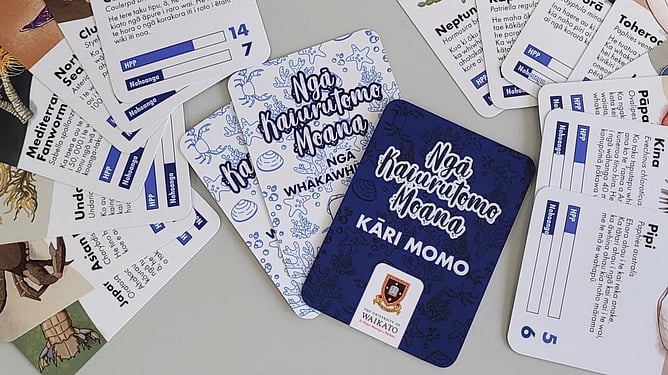
o you know someone who spends their weekends on, in, or next to the water? Marine Invaders is the card game that turns everyday beach walkers, boaties, divers, and fisher people into frontline biosecurity watchers.
This game is suitable for all ages, is played in under 15 minutes, and is genuinely fun.. Available in both English or te reo Māori. It's been played in schools, at festivals, libraries, and conferences, and makes a great gift for anyone who cares about the moana.
On sale until 31 July, so get in quick.
Haere mai new TMBC members
We are delighted to welcome the following members to the TMBC whanau.
Tauranga City Council as a new Gold Funder, and extend a warm welcome to our newest organisation members: Bay Science, Pestie, and Te Tāwharau o Ngāti Pūkenga.
Interested in becoming an organisation member or funder, or know someone who would be a great fit? Find out more on our website.